A lot of really smart people comment on this blog, so today I’m asking for advice. No politics, no “big” question involved, just a practical dilemma.
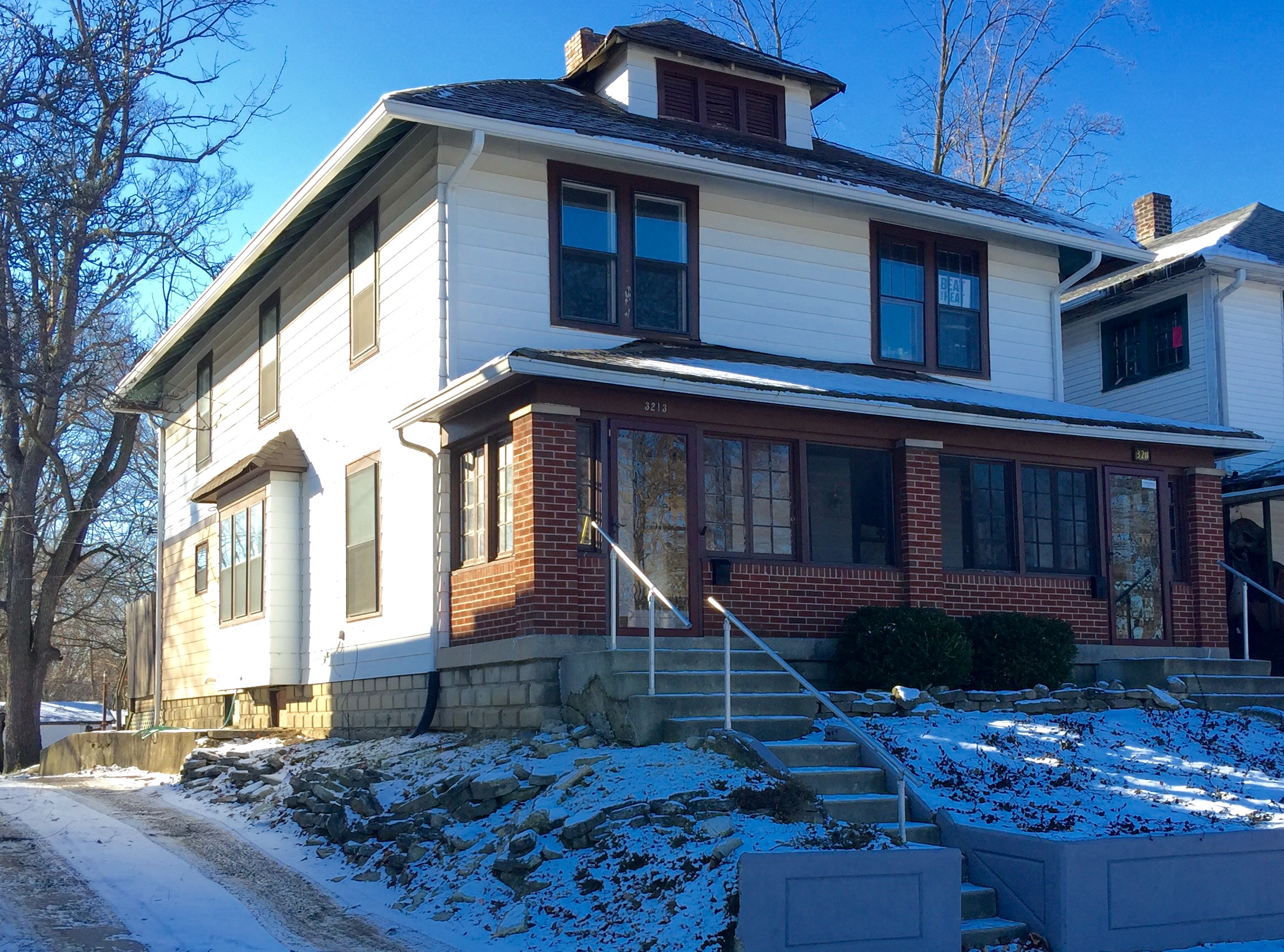
Over the last few years, my husband and I have found ourselves accidental landlords. For reasons not relevant to this post, we have two properties we rent: a small condominium on Indy’s northwest side, and half of a double on Brookside Parkway, South Drive.
We’ve been fortunate in that the person renting the condo is an ideal tenant who has been there several years. Not so much for the property on Brookside. The last tenant moved out without any notice–just vanished. And the one before that had trouble coming up with the rent (and was surly when reminded).
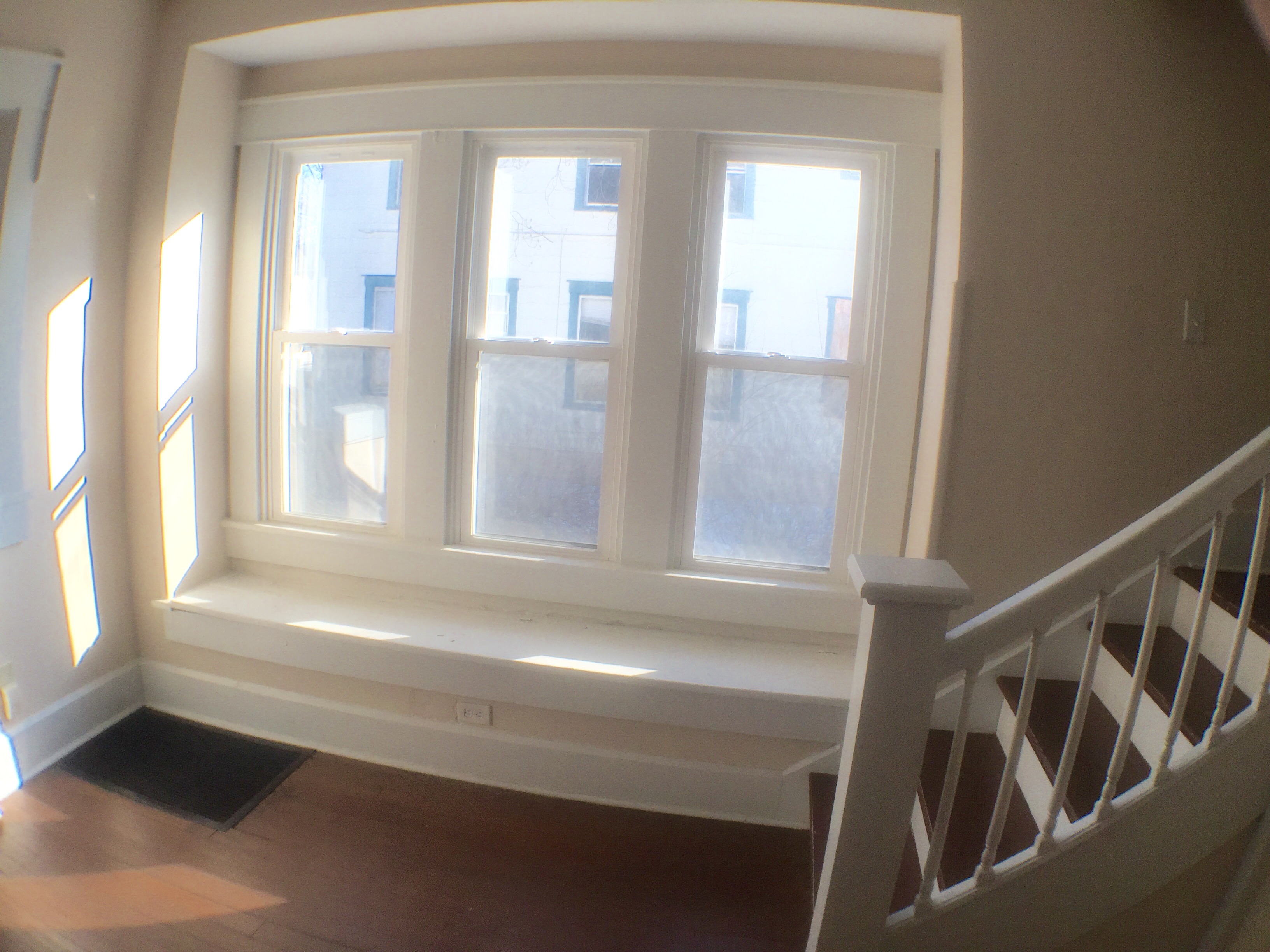
I think we are pretty good landlords: we keep the property in good repair. We recently upgraded the electrical service. We’re in the process of cleaning and doing touch-up painting and yard work after the unanticipated move-out, and we’ve done our homework to ensure that the rent is reasonable for the area and the property. The unit has three bedrooms, bath and a half (the kitchen and baths were installed new six years ago). There’s a front porch and a back deck, a storage shed, and appliances: washer/drier, stove, refrigerator, dishwasher, microwave. The unit has a full basement (unfinished, but good for storage). It is directly across the street from a really nice city park with a community center, playground and pool.
The neighborhood is not fancy, but it is safe. (Our son lives in the other half.) I’m going to attach photos. Rent is 750/month.
So here is my question: how do I go about getting a responsible tenant, preferably long-term? What is the best way to check references? In other words, what am I doing wrong?
All advice is welcome–and if anyone local reading this knows someone responsible who might be interested in leasing this property, that would be FANTASTIC!
Frank Luntz is one of the people who gave us today’s GOP–a party that has steadily become more fixated on strategies for winning elections than on fidelity to a governing philosophy. He was the guru who coached candidates for office in “framing”–how to use language to describe policies in ways that would seem acceptable to people who probably wouldn’t find those policies very congenial otherwise.
In a March article about young voters, he recited the Grand Old Party’s daunting prospects, noting that
Americans ages 18 to 29 made up 19% of the vote in 2012, and President Obama pulled about 60% of their support. This year, they’re even more engaged: Nearly six in 10 (57%) say they are following the election “extremely” or “very” closely. And it’s just the primaries! What’s more, 87% respond that they are “extremely” or “very” likely to vote in the general election.
And what does this newly engaged cohort think about the GOP?
The Republican Party doesn’t have a problem with younger voters. Younger voters have a problem with the Republican Party, and it is rapidly becoming a long-term electoral crisis.
In our recent national survey of 1,000 first- and second-time voters ages 18 to 26, Republicans weren’t just off on the wrong track. They were barely on the radar with this Snapchat generation, as it is sometimes called….
The problem, or “crisis” if you’re an active Republican, is in their political identification. Fully 44% identify themselves as Democrats, higher in my polling than any age cohort in America. By comparison, about 15% call themselves Republican, lower than any age cohort. The remaining 42% say they’re independent, but on issue after issue they lean toward the Democrats. It’s not that young people love the Democratic Party — they don’t. But they reject the Republican Party and the corporate interests it appears to represent. Democrats can live with this dynamic. Republicans might die by it.
Luntz recognizes the problem, but seems oblivious to the reasons for it. For him, it’s still just strategy–the form of the message, rather than the substance. For example, he blames rejection of the GOP by young Americans in part on the Democrats’ better use of social media, and says the GOP should follow the example of former California governor Arnold Schwarzenegger, who endorsed a presidential candidate via Snapchat.
What Luntz and much of the Republican establishment fail to recognize is that young voters are rejecting what the GOP has become post-Reagan.
My students look at the Republican party and see theocrats. They see stupid bathroom laws and other efforts to marginalize their LGBT friends. They see corporate fat cats prospering at the expense of the hard-working poor. They see efforts to disenfranchise minority voters and cut back on school lunch programs. They see the Congressional “Party of No” rejecting and obstructing a President they admire–and they recognize that the primary motivation for that obstruction is racism and a stubborn refusal to come to terms with the fact that a black man won the White House.
Research confirms that this generation is considerably more inclusive than those that preceded it, concerned about their communities, and critical of entrenched privilege. When they look at today’s GOP, they don’t see principled defenders of liberty and markets and a level playing field–they see oligarchs fielding armies of lobbyists to protect their tax loopholes and subsidies at the expense of the Walmart greeter and the McDonald’s server.
There is no doubt in my mind that this generation will change America’s mean-spirited political culture for the better. I’m less sanguine about what it will take to uproot the entrenched systems–from gerrymandering, to provisions in the tax code, to intimidation of the judiciary, to the growth of “propaganda media”– that make political change much more difficult.
One thing I do know: mastering Snapchat will not bring young voters into the GOP.
As of today, the presidential primaries are over. Our choice in November is between Hillary Clinton and the unthinkable. So it may be instructive to look closely at those who are thinking the unthinkable.
Trump’s recent attack on Judge Curiel is doing more than simply underlining The Donald’s utter ignorance of separation of powers–the bedrock of America’s constitutional architecture. It is driving a wedge between the unapologetic racists who back him–the KKK and white supremacists whose support he has pointedly refused to reject–and the much larger number of voters who deny racist attitudes and tell pollsters they like Trump because “he tells it like it is.”
These are the people who harbor “racial resentments” but are unwilling to admit (probably even to themselves) that they are responding to Trump’s way-beyond-dog-whistle rhetoric.
Recent data is bringing the drivers of Trumpism into sharper focus, and what we’re seeing is striking: Racial attitudes may play a larger role in opinions toward Trump than once thought. Economic concerns, on the other hand, don’t seem to have as much of an impact on support for Trump.
Two recent studies bear this out. In the first, Hamilton College political scientist Philip Klinkner analyzed data from the 2016 American National Election Study (ANES) survey (a representative sample of 1,200 Americans) to compare feelings and attitudes toward Donald Trump and Democratic rival Hillary Clinton. He explored how economic opinions, racial attitudes and demographic variables predicted an individual’s feelings toward Trump and Clinton. He found that one factor was much stronger than the other:
“My analysis indicates that economic status and attitudes do little to explain support for Donald Trump,” he wrote for Vox last week. More to the point, “those who express more resentment toward African Americans, those who think the word ‘violent’ describes Muslims well, and those who believe President Obama is a Muslim have much more positive views of Trump compared with Clinton,” Klinkner found.
In March, The Washington Post and ABC News conducted a similar survey, using data from a national poll, and came to similar conclusions. So did the Pew Research Center–pretty much the gold standard for survey research.
Those of us who have been watching Trump’s electoral successes with disbelief–who have been appalled by his boorishness, astonished by his ignorance of governance and both foreign and domestic policy, and repulsed by his consistent willingness to “go there”–to utter the sorts of racist, sexist, xenophobic invective generally considered inconsistent with civil society–apparently have an answer to the question “who could possibly vote to put this narcissistic buffoon in the Oval Office?”
Racists, sexists and xenophobes.
As Trump initially doubled down on his insistence that being Latino, Muslim or female is an “inherent conflict of interest” that should disqualify judges from ruling on cases that involve him, it was interesting to see the reaction of his supporters in the second category–those in denial about their racial attitudes.
We expected the KKK to applaud, but as these “second-category” voters experience discomfort in confronting the real reason Trump appeals to them, defense of the indefensible may come at a cost.
I’ve always been a happy person, but I’ll admit to being very depressed these days.
The thought that Donald Trump is actually the Presidential candidate of one of America’s major political parties–a party I worked for and supported for 35 years– nauseates and frightens me. Without money, this man would just be dismissed as the ignorant pontificating asshole you try to avoid at parties, the guy telling tasteless racist jokes and bragging about his latest con.
(If we had any doubts about the racism, a recent study has pretty much settled the issue: in a survey undertaken to identify the most likely Trump supporters, by far the most likely were people who still insist that President Obama is a Muslim.)
And there have been plenty of cons: his “send in your urine sample and we’ll send you supplements” diet scam, the Trump University fraud (Trump’s “not fair–the Judge is Mexican” sort of reminds me of the whiny undergraduates who complain that their poor grades are because the mean professor didn’t like them…), his refusal to pay people the full amounts of their contracts (he calls that “haircuts”), and so many more.
As scores of students complained that Trump University was a ripoff, the Better Business Bureau in 2010 gave the school a D-minus, its second-lowest grade. State regulators also began to take notice.
The office of then-Texas Attorney General Greg Abbott, a Republican, opened a civil investigation of “possibly deceptive trade practices.” Abbott’s probe was quietly dropped in 2010 when Trump University agreed to end its operations in Texas. Trump subsequently donated $35,000 to Abbott’s successful gubernatorial campaign, according to records.
…
Florida Attorney General Pam Bondi briefly considered joining with Schneiderman in a multi-state suit against Trump University. Three days after Bondi’s spokeswoman was quoted in local media reports as saying the office was reviewing the New York lawsuit, the Donald J. Trump Foundation made a $25,000 contribution to a political fundraising committee supporting Bondi’s re-election campaign. Bondi, a Republican, soon dropped her investigation, citing insufficient grounds to proceed.
So, we know Trump is sleazy and corrupt. But apparently, there are officeholders who are equally corrupt. Or at least, easily corruptible. Maybe that explains the willingness of so many in the GOP to obediently “fall in line” and support the candidacy of this massively unqualified jerk.
I’d love to believe that Trump’s candidacy will go down in flames–that Americans will reject this fascist buffoon, that–as a friend puts it–he is not what is meant by Orange is the New Black….But I keep thinking of a (possibly apocryphal) story about the woman who approached Adlai Stevenson after he’d made a speech, and said “Oh, Mr. Stevenson, no intelligent American could fail to vote for you after that speech.”
Stevenson reportedly replied, “But Madam, I need a majority.”
I recently came across a citation to a fascinating report from the White House Council of Economic Advisors. (Yes, I know I’m a nerd and my reading habits are embarrassingly dorkish…). But it was interesting!
When asked to study the cost/benefit of various crime reduction policies, the Council responded with data like this:
The authors consider a few ways of reducing crime. They forecast that hiking the federal minimum hourly wage from $7.25 to $12 would reduce crime by 3 percent to 5 percent, as fewer people would be forced to turn to illegal activity to make ends meet. By contrast, spending an additional $10 billion on incarceration — a massive increase — would reduce crime by only 1 percent to 4 percent, according to the report…
They also calculated the true social costs of crime. It totaled almost $308 billion in 2014. So a simple move like raising the minimum wage to $12 doesn’t only reduce crime by 3%-5%, it would save $8 to $17 billion a year.
The problem, of course, is that in the United States, policies are not evaluated and/or implemented based upon any sort of cost/benefit analysis. A continuing influence of this country’s early Calvinism is our predictable analysis of even the most prosaic policies as “moral” issues, requiring determination of “deservedness.” We don’t ask, what would work best? Instead, we ask “How do we avoid rewarding people for behaviors (real or imagined) of which we disapprove?”
It comes back to a conviction–evidently baked into American DNA–that if people are poor, they must be morally defective. Lazy. Unmotivated. Lacking “middle-class values.”
And all of the data that demonstrates otherwise is simply disregarded as the product of wooly-headed liberals.
If we made policy based upon evidence, we would add the projected reduction in crime to the myriad other benefits of raising the minimum wage.
Increased buying power and consumer demand (as a result of more people having more disposable income) would drive improved economic performance.
According to research, easing the incredible stress experienced by so many low-wage families would reduce familial dysfunctions and even domestic violence.
Ameliorating the fiscal pressures that cause poor families to move more often would reduce the disruptive effect on the education of children who frequently change schools.
Someone trying to support a family on today’s minimum wage does not even reach the federal government’s poverty line for a family of three. They would make about $14,500 per year. The federal poverty line for a family of three is $18,123. If the minimum wage were increased to a level at which families could sustain themselves, fewer people would end up needing government assistance for housing, food, or health care. This would be a significant benefit to taxpayers and to states’ budgets.
So why is it so hard to raise the minimum wage?
One intriguing theory, from the Economic Policy Institute, is that raising the minimum wage may be seen as a women’s issue.
While increasing the minimum wage would have a sizable impact on both men and women, it would disproportionately affect women. That women comprise 54.5 percent of workers who would be affected by a potential minimum-wage increase makes it a women’s issue… The share of those affected who are women varies somewhat by state, from a low of 49.3 percent in California to a high of 64.4 percent in Mississippi (according to the authors’ analysis of Current Population Survey Outgoing Rotation Group microdata). California and Nevada, also at 49.3 percent, are the only states where women do not constitute the majority of those who would benefit.
I hate to be a cynic, but maybe the disproportionate benefit to women is why we have so much trouble getting it done.
Misogyny? Or just our usual penchant for stubborn ideology over evidence?